Art Camp No.2 — Art & Ceramics
The Idea
We live in a world where everything must be perfect, fast, correct. Where a mistake is a failure, and imperfection is a reason to start over.
I wanted to create a space where it's the opposite.
Where a crack in a cup makes it more beautiful.
Where paint flows the wrong way—and that's okay.
Where fire decides for you, and you accept the result with gratitude.
The Japanese philosophy of wabi-sabi teaches: beauty lies in impermanence, in simplicity, in naturalness. Perfection is boring. Life is in the flaws.
This camp was about living this philosophy through hands, through clay, paint, and fire. To slow down. To exhale. To create something of your own—without judgment, without fear, without "I'm not good enough".
Simply to be. Simply to create.
What Happened
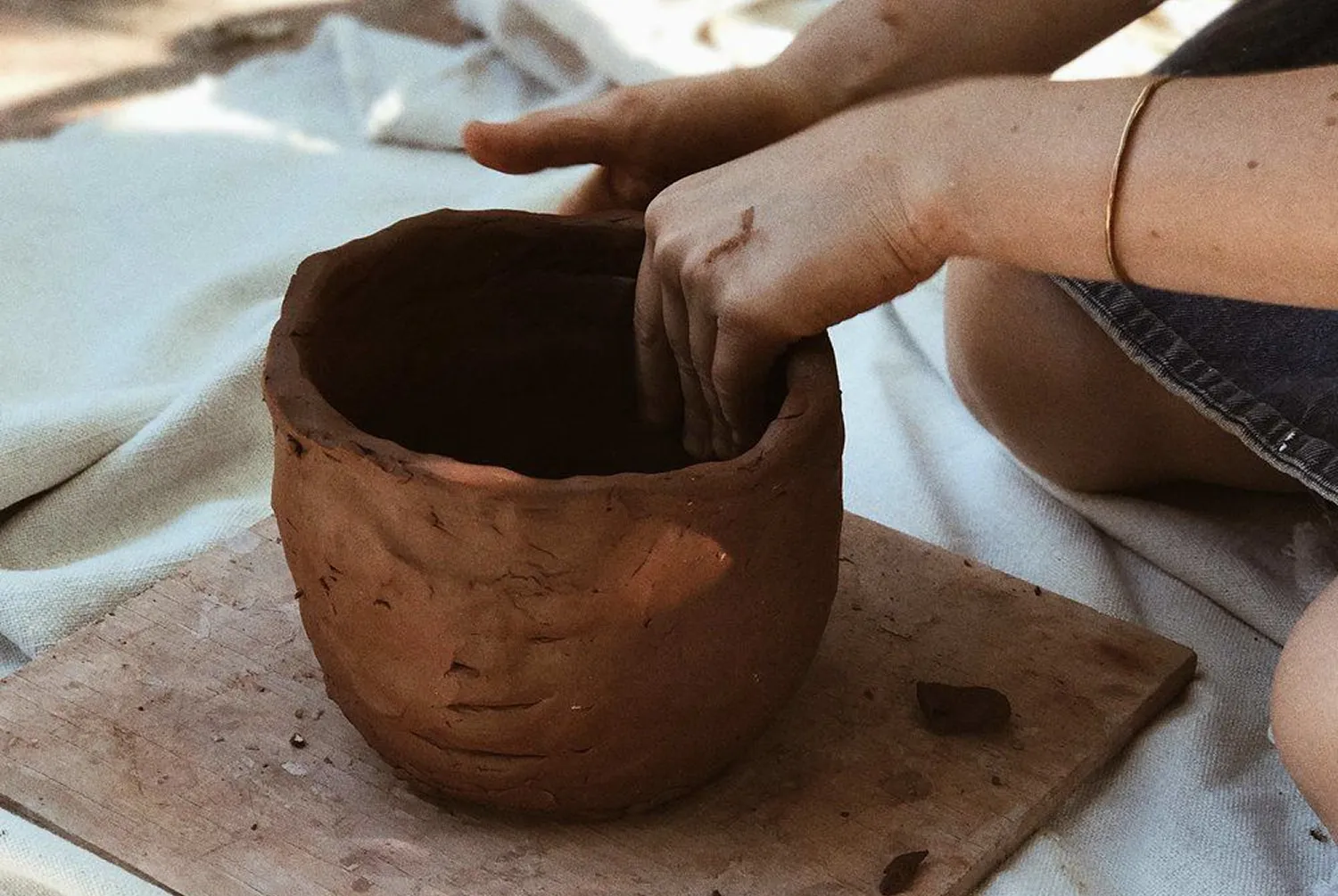
Friday: Arrival and getting to know clay. We shaped ceramics—cups, bowls, whatever our hands asked for. No templates, only process and meditation.
Saturday: Plein air at Gomismta fortress—painting mountains and autumn light. After lunch—Japanese ink painting: one brush stroke, no right to error. In the evening—a film about art and heartfelt conversations late into the night about why we're afraid to be imperfect.
Sunday: Decorating ceramics, then—raku firing. The main event. Red-hot pieces from the kiln, smoke, fire, sawdust, cold water—and the birth of unique patterns created by fire, not by you. Impossible to repeat. Impossible to control. Only possible to accept.
Monday: Washing the ceramics, rinsing off the soot—and underneath revealed the patterns of fate. Saying goodbye to the house, the mountains, each other.
What Remained
Ceramics—alive, with raku cracks, with blackened areas, with metallic sheens. Each one—the only one in the world.
Paintings and ink works—moments caught on paper.
Photos of raku firing—faces in the glow of flames, hands in smoke.
But most importantly—the feeling that imperfection has the right to exist.
That you can slow down and hear yourself.
That creativity is not about the result, but about the process.
That there's more beauty in a crack than in a perfect surface.
The Atmosphere?
Amazing.
Silence without pressure. Creativity without judgment. People without masks.
Someone said at parting: "I don't remember the last time I exhaled like this."
Someone else: "I never thought I'd be so proud of an uneven cup."
This wasn't just a camp.
This was permission to be yourself—imperfect, alive, real.
P.S. We're already planning the next one. Because wabi-sabi isn't a one-time story. It's a way of living.